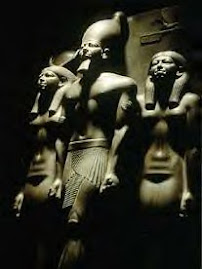
Nubian Moor Race

Nubian Moor Race

Nubian Moor Women

Nubian Moor Women

Sunday, November 07, 2010

The Great Slavery Debate

Photobucket

Photobucket

Photobucket

Shem Hotep ("I go in peace").
Photobucket
The Great Slavery Debate: Reparations Twist

When witnessing a debate on reparations, I often feel like I’m listening to people speaking completely different languages. Consider that when unarmed Black Oakland BART rider Oscar Grant was killed by a White police officer on a train platform, Blacks demanded a first-degree murder charge, although it had little chance of being sustained (no malice aforethought). While the accusation made Blacks feel good for a minute, the illusion of fair play departed when the jury opted for a more accurate charge.

When Blacks argue for reparations, it does not mean that they know or care anything about an accurate application. What they care about is a means to take revenge, while getting compensated for the suffering of their relatives (the end). Of course, Whites (and some Blacks) try to explain that reparations do not apply, to a chorus of ‘I-don’t-give-a-bleep what a White man or Uncle Tom thinks’. It’s not about laws or evolving moral codes of the day – it’s about emotion and payback. We need to call it what it is.

Reparations debates will never be resolved until Blacks can inject some objectivity where only emotions currently exist. For their part, Whites will never be a part of the resolution until they can cop to how reasonable it is for Blacks to blame slavery, as the catch basin, for the litany of misdeeds that continued after slavery ended.

Hopefully the day will come when Blacks stop soliciting unfulfilling indulgences from Whites, when what they really want is for Whites to admit that their ancestors outsmarted themselves, not only by kidnapping Africans, but more so by not making Blacks equal opportunity citizens after the emancipation. Both Blacks and Whites need to work (together), minus race cards, at understanding how pretend equality (of opportunity), the sustained post-slavery sin, got us to the dysfunctional mess we find ourselves today. Only then can we start making decisions and taking action to reverse the damage.

Photobucket
The Great Slavery Debate: Ungrateful Negroes

When it comes to discussing, or even thinking about, slavery, the great taboo of White folks is embodied in the question forever on their minds and almost never on their tongues, “Why are Blacks so ungrateful to be in America, when Africa is the worst place on the globe in terms of health, jobs, government, education, crime, climate, resources, blah, blah, blah?”

They will go on to say, “sure, slavery was bad for your ancestors, but it ended a long time ago”. They will also say that racism may exist, “but it exist in Africa too, and much worse, with one tribe committing genocide on another”. In the days before political correctness, Whites were fond of telling Blacks that they should go back to Africa, if they don’t like it here. The implication was always that however bad Blacks think America is, it is worse in Africa.

Where White people got off track is in thinking and acting like Blacks are immigrants. “Go home”, has always been the retort for the disgruntled immigrant, and some even made the return trip. But the African ancestry that was forced here is mostly like those people who stayed behind in Europe, China, India, etc. – meaning they are not immigrant-minded. So why did Black people stay here? Out of those that could have returned, they stayed mostly out of spite, and certainly not because anyone offered them a shot at the American Dream. This was the grand screw-up of US leadership before, during, and after the Civil War.

Fast-forward - if Black people could ever find a reason to want to be here, because of the relative opportunity, instead of being here to simply piss-off White people, a lot of the problems of the day would disappear. And ditto, if White people could ever accept responsibility for post-slavery abuse, without pretending to handover the keys to the kingdom, or other counter-productive acts of contrition.

The paradox is that Blacks cannot make Whites miserable about the past and what followed, without assuring their own adjacent misery, and Whites cannot make amends by only pretending to consider Blacks capable and
deserving of a fair shot. So we are all miserable together down the crapper

Photobucket
The Great Slavery Debate: Was Slavery Profitable?

Note: There are many who say that the economics of slavery were not very profitable, Thomas Sowell notably, and I would say they are wrong. However, it is important to distinguish (as I will attempt) between plantation slavery economics and the greater commerce value/impact of the triangular trade.

There are two high schools (Part 1 today), and one graduate school (Part 2 coming), of thought on the degree to which this country owes its fortunes to slavery, and by inference to Black ancestry. It is this notion of who benefited and who is owed, intertwined with current dysfunction, which sits as a big bugaboo to progress.

The Atlantic Slave Trade was a profitable component of triangular commerce of that day, but by itself not world changing. In fact, slavery has often been the spoil of a society that was good at something else, mainly war. Having other people to do your loathsome work has been a luxury for the already rich. The Atlantic Slave Trade was a final burst where pure labor was of pivotal importance to a more sophisticated system of commerce, mostly involving sugar and Europe’s sweet tooth for its by-products.

In the labor-starved Americas, slavery is what made the triangular system happen, on the front end. Thereby, it deserves a disproportion of the credit for the very profitable distilled-spirits and textiles on the back end. On the other hand, while plantation slavery made those owners rich, those same owners were not directly responsible for this country’s economic fortune. The overhead required to administer slaves within a system of zero incentive, was high. As a sidebar, had slaves been able to work in parallel to purchase their freedom, the US might have avoided a devastating war with itself.

The Wall Street banks and insurance companies in the north were a different story than the plantations. The slave trade business gave this country a critical foundation in establishing the commerce and banking infrastructure that world leadership would require. The names of those companies and their impact are undeniable – JP Morgan, Chase, Lehman Bros., Aetna, New York Life, to name a few.

So, in answer to whether slavery was profitable, the answer is both no and yes, but much more yes – as it was the lubricant for the most profitable European commerce transactions of the day. This is true even though American plantations were inefficient in their brutal waste and high overhead cost.

Up Next: Part 2 (Graduate School). Just because slavery was profitable does not mean that slaves, or their ancestors, have a rightful claim. The details and context of the day, both legal and ethical, must be applied.

Photobucket
Robyn I love you.

Lots of people want to ride with you in the limo, but what you want is someone who will take the bus with you when the limo breaks down. Love puts the fun in together, the sad in apart, and the joy in a heart.
Soul-mates are people who bring out the best in you. They are not perfect but are always perfect for you. Trip over love, you can get up. Fall in love and you fall forever. Love one another and you will be happy. It's as simple and as difficult as that. Are we not like two volumes of one book? Without love, what are we worth? Eighty-nine cents! Eighty-nine cents worth of chemicals walking around lonely.The hours I spend with you I look upon as sort of a perfumed garden, a dim twilight, and a fountain singing to it. You and you alone make me feel that I am alive. Other men it is said have seen angels, but I have seen thee and thou art enough.
I've fallen in love many times... always with you.
Photobucket

Thursday, October 28, 2010

Blacks Buy Blue Eye Surgery

Photobucket

Photobucket

Photobucket

Shem Hotep ("I go in peace").

Photobucket
Blacks Buy Blue Eye Surgery

Continuing my pandering to Blue-eyed madness, I am compelled to write about idiots/people who pay big money to have blue implants surgically inserted into their eyes. Yep, you heard me, inserted as in carved! I first thought that this could not be true, but after various aging relatives had lenses implanted to remedy cataracts, I thought I better do some homework.

The procedure for quasi-permanently changing the color of one’s eyes involves implanting a colored, optic-neutral, lens behind the cornea and in front of the iris. Knowing a bit about how the eye works (don’t ask how), the first thing I wondered was how this implanted lens would not irritate either the cornea or iris while being held in place to give the owner those factory-fresh baby-blues? It is this potential to obstruct these two parts of the eye that would contribute to damage and the body’s immune response, all resulting in complications of a blinding nature.

The implants, commercially labeled NewColorIris™, are available from a Panamanian eye surgeon, Delray Alberto Khan. It is critical to note that the Khan (ironically pronounced “Con”) cosmetic procedure is not approved anywhere outside of the third-world (where it seems authorities do not care if doctors butcher patients). It also seems that Khan’s patients/victims are fond of having those damn things removed pronto, in an attempt to save their sight. I found one patient who seemed to be happy, for now (here).

Interestingly enough, there is an eye surgeon in Beverly Hills, Kerry K. Assil, who repairs and replaces damaged or congenitally missing (here) irises, presented as medical conditions. Assil’s implants, while potentially changing eye color, also reveal themselves, by not obscuring the entire original iris. However, Dr. Assil’s location in Beverly Hills, is suspicious, as 90210 is also the mecca of the cosmetic surgery industry. It would not surprise me if Assil was padding his account by making blue eyes bluer, on the QT, but this is only conjecture right now.

Caveat Emptor. Let the buyer beware.

Note: A Blue-eyed fellow like the one in the picture had his NewColorIris(tm) implants removed due to complications, and removal only cost him $16,000.


Photobucket
The Great Slavery Debate – An Introduction

Perhaps the most recurring historical truism of America is the need for Americans to move past slavery. Mind you, move past does not mean ‘get over it’, in the snide way some people admonish. At the front of the line of the many who need to move on are Black people. In therapeutic lingo, this means squarely facing the past then letting it go, so as not to impede the future.

This weekend I had a spirited debate with some family members, including my 19 year old daughter and her boyfriend. The young Black man, from Atlanta, was the most adamant contender that ‘our slavery’ was worst than previous instances, although he offered no specific difference, other than the distance that slaves were transported.

Others in the debate gave examples of the brutality of slavery in the South, from beatings, murders, assaults, to the wrenching apart of loved ones. My offering, that these treatments were within the range of treatments of slaves throughout human history, fell on deaf ears. Nope, the contention remained that ‘ours was worst and this is why Black people are so messed up today’.

Over the coming weeks/months, I will take a look at some questions about North American slavery, against the context of today. Why did it happen? Who benefited the most/least? Why did the founders adopt it, and then fight about it. Who was Jim Crow? What is the social and economic legacy? How has slavery history affected modern-day immigration? What lessons were learned/not learned?

If this weekend was any indicator, it might be kind of interesting.

Photobucket
The Great Slavery Debate: The Footing

The second most challenging aspect of a slavery discussion is not getting blasted out of the saddle, with your point-of-view still in the holster. Unless your words are something like, ‘slavery in America was the pinnacle of man’s inhumanity to man’, you barely stand a chance. This is because today’s discussion is most often against today’s morality, rather than the progress of that time. Of course, to say that America’s slavery was not the worst is nothing close to saying that it was anything less than bad. All slavery was/is bad for the enslaved, as well as the society.

The only relative comparison I will make is that the Atlantic slave trade objectively delivered more slaves from Africa to South America (over 5,000,000) than to the North (500,000), and by all accounts, those delivered to the south suffered a much higher mortality. Their life spans were short, only one to five years, due to the grueling work, mistreatment, and harsh conditions on plantations, in mines, and elsewhere. South American slave owners expected to get no more than a few years of hard labor from a slave, and they went about fulfilling this prophecy. The work was 7 days/week, 18 hours/day, no women, no children, bad food, no care, and no mercy.

The most challenging aspect of a slavery discussion is the notion that current Black plight, with respect to crime, unwed parenting, drug abuse et al, is somehow a function of the ‘slavery-at-it’s-worst’ label attached to the American colonies (British and French). I have yet to find a description of slavery, anywhere, or at anytime, that tracks to the dysfunction within today’s Black community. So, I think it must derive from another source. FYI, my authority on slavery is a book entitled, Slavery: A World History, by Milton Meltzer.

My objective, in this series, is not to deny or discount the negative impacts of slavery, then or now, nor is it to absolve its practitioners or their beneficiaries. I will discuss this later. Rather for now, I will say that dispassionate research indicates that current Black plight is not located at the intersection of the two, nor are any solutions. In its proper proportion, slavery informs us in critical ways. When taken out of proportion, it mostly blocks our view and advancement.

Photobucket
The Great Slavery Debate: Origins

Considering that most Americans cannot name all fifty states, or find S. Dakota on a map, it would not surprise me at all that those same folks think that slavery was invented, or re-invented, in the colonies now making up these United States. Unfortunately, what most Americans know of slavery was passed down from people who saw Alex Hailey’s fictionalized Roots mini-series. There is much more to slavery than this, as it has been going on for thousands of years.

Slavery began when hunter-gathering ended, some say about 11,000 years ago. Once agriculture advances produced more food than people in certain areas could eat, people began enslaving others, as they could afford to keep their captives fed. Before that, they simply killed their enemies without a blink. To help our perspective, during the 1,000 or so years of the Roman Empire, 100 million people in an around the Mediterranean area were enslaved.

The lives of slaves have rarely been ‘good’, as some would describe. Throughout time, slaves have been property not people. Their treatment, and very existence, has always been at the whim of their owners. This means they could be killed, assaulted, neglected, or simply worked to death, without repercussions. In most cases slave women bore offspring into slavery, both replenishing and growing the ranks.

Slavery has always been profitable and the foundation of commerce for all societies. Slavery commerce was often the aim/outcome of going to war, where entire societies were enslaved and sold as spoils. It is estimated that 25 to 50% of the world’s population has been enslaved at some time in history. So, the millions of slaves captured and delivered during the Atlantic Slave Trade hold no distinction other than the distance they were transported, and timing with the moral question of acceptability.

The taboo nature of slavery history has fostered a level of ignorance, all the way around, that hinders placing it in proper perspective.

Photobucket
Robyn I love you.

Love is a symbol of eternity. It wipes out all sense of time, destroying all memory of a beginning and all fear of an end. Love - a wildly misunderstood although highly desirable malfunction of the heart which weakens the brain, causes eyes to sparkle, cheeks to glow, blood pressure to rise and the lips to pucker. You learn to like someone when you find out what makes them laugh, but you can never truly love someone until you find out what makes them cry. Sometimes we make love with our eyes. Sometimes we make love with our hands. Sometimes we make love with our bodies. Always we make love with our hearts.

Photobucket

Thursday, October 21, 2010

Black Boy’s Blue Eyes Show Lesion

Photobucket

Photobucket

Photobucket

Shem Hotep ("I go in peace").

Photobucket
Black Boy’s Blue Eyes Show Lesion

The boy in the pictures is probably one of the most striking examples of a black person with blue eyes. I believe his name is Laren Galloway and I do not announce his identity lightly. While it is interesting to see how the lad is growing up, this is not what caught my interest. Rather, what jumped out at me instantly was that he has some form of growing lesion on the inside of his left eye, specifically in the area of his iris. This lesion needs to be examined medically ASAP, (of course I leave room that his parents are already on top of it).

Eye lesions are usually benign (non-cancerous) and remain so, but this is not always true, nor does it mean that they should ever be ignored. What is really key is that they are kept under routine watch by a medically qualified eye specialist. What that person will watch for are changes in shape and size, as indications of brewing problems. Laren’s lesion, barely visible in the first picture, has clearly increased in size, as he has aged.

I have no contact with his family to voice my concern. I do recall that he might live in Louisiana. If you know this boy’s family or parents, please contact them and express the concern I present here. His eye sight and greater health/well-being are at risk without proper medical care. If you know this boy, but do not feel comfortable approaching his parents, you may send me contact information and I will contact them. Thanks (in advance) for helping to make sure this boy is being cared for.

Photobucket
Syndrome Gives Blacks Blue Eyes

A recent commenter on this blog suggested that the blue-eyed Black boy, in an earlier post, may present Waardenburg Syndrome, a rare autosomal genetic disorder that has possible bright blue eyes as one of its qualifying criteria, along with possible deafness (common). Actually, the cause of the blue eyes is a form of albinism that may include patches of non-pigmented skin or forehead hair, regardless of ethnicity.

There are four types of Waardenburg Syndrome, with a mix of possible characteristics as the determinant. Medical challenges increase with type. The boy in the picture is displaying two major symptoms of type 1, as does the previous boy (perhaps) (here); bright blue eyes and dystopia canthorum, a condition where the inner corners of the eyes are set more widely apart, but with normally distanced eyes.

Waardenburg occurs once in every 42,000 births, and is a deficiency inherited from a single parent, who may or may not display similar characteristics. Regarding the eye, color abnormalities come in three forms; heterochromia (multiple colors), bilateral isohypochromia (pale blue eyes), or fundus (reflective) pigmentary alterations (spottiness).

So, besides naturally occurring genetic blue eyes in dark skinned people, as previously discussed, understanding Waardenburg's is another avenue of accurately recognizing phenotype (gene expression) in eye color.

Photobucket
Robyn Why do I love you?

You have to walk carefully in the beginning of love; the running across fields into your lover's arms can only come later when you're sure they won't laugh if you trip. A hundred hearts would be too few
To carry all my love for you. The most important things are the hardest to say, because words diminish them. If love is blind, why is lingerie so popular? Love is only a dirty trick played on us to achieve continuation of the species. Love does not consist of gazing at each other, but in looking together in the same direction. It is astonishing how little one feels alone when one loves.
Photobucket

Thursday, October 14, 2010

Why are White People White-Skinned?

Photobucket

Photobucket

Photobucket

Shem Hotep ("I go in peace").

Photobucket
Why are White People White-Skinned?

Being black, I scarcely wondered why I was black, but I did often wonder why white people were white. I never believed in the ‘God wanted it that way’ answer. It seems very natural that whites and blacks would harbor the same question, however taboo it is to toss it into conversation. Indeed, science has provided us with an answer, but I hardly see it in print for non-scientists.

The scientific record shows relatively hair-less humans evolving from hairy primates in Africa. At the time when hairy proto-humans ‘loss’ their hair and developed sweat glands for cooling their big brains, they also needed to adapt their production and regulation of the pro-steroid hormone, Vitamin D(3), which was critical to healthy bones and reproduction. The result was an adaptive higher level of melanin in the skin, turning it dark. Viola, healthy dark-skin humans to populate the world!

As early Africans migrated north to Eurasia, with its lessened sun intensity, dark skin posed a problem. Vitamin D(3) fell to unhealthy levels, except that built-in genetically adaptive skin traits quickly kicked-in to lightened skin responsible for producing the required D(3). The farther north they ventured the lighter the skin needed to be to absorb the right amount of sun. It really is that simple. There is a great book that explains all of this in detail, written by recognized skin authority, Nina Jablonski PhD., called “Skin: A Natural History” (here).

So there it is - latitude (north/south position) on the globe pretty much dictates skin color (here). There are a few exceptions to this rule, associated with levels of Vitamin D in the diet. By example, the Inuits (indigenous Arctic people) are relatively darker, even at such a high latitude, because of oily-fish diets laden with Vitamin D(3). Aborigines in continental Australia, arriving via the ‘intercoastal migration’, maintained their melanin through similar fish-rich diets, on the coast, coupled with the fierce demands of an intense interior desert sun.

As a side bar, and from a Vitamin D(3) healthiness perspective, the continental US is (on average) too sunny for most fair whites, and not sunny enough for most brown-skin blacks. Everyone needs Vitamin D management for good health.

Photobucket
Robyn, I love you.

Power without love is reckless and abusive, and love without power is sentimental and anemic. A life lived in love will never be dull.
Love many things, for therein lies the true strength, and whosoever loves much performs much, and can accomplish much, and what is done in love is done well. Life is meaningless only if we allow it to be. Each of us has the power to give life meaning, to make our time and our bodies and our words into instruments of love and hope. The more I think it over, the more I feel that there is nothing more truly artistic than to love people.
Your task is not to seek love, but merely to seek & find all the barriers within yourself that you have built against it. Love's greatest gift is its ability to make everything it touches sacred. Why love if losing hurts so much? We love to know that we are not alone.

Thursday, October 07, 2010

Why Are Black People Black-Skinned?

Photobucket

Photobucket

Photobucket

Shem Hotep ("I go in peace").
Photobucket
Why Are Black People Black-Skinned?

While asking the question ‘Why are White People White?’ (here), I touched on that black people are black by the same mechanism. However, my explanation was too brief, and the question deserves its own full answer. Keep in mind this evolutionary cheat-sheet: first, there was panting and hairiness, and then came limited sweating and hairiness, and now we have full-body sweating and no hair (little hair).

To begin, earlier hairy primates, or proto-humans, living in Africa were less efficient at dissipating the body heat that resulted from strenuous exertion (hunting, gathering, and avoiding predators). Panting is the way most mammals cool themselves, rather than through sweating. As an evolutionary alternative, sweat glands appeared first over hairy bodies and then over less-hairy bodies, allowing for rapid cooling and quick evaporation. Evaporative cooling pulls heat away, countering the insulating effect, whereby the moisture stays on the skin, trapped by hair, and increasing in temperature from both the sun and internal exertion.

Indeed, sweat glands were an improvement over panting, allowing for greater exertion, but there was another hurdle. Full-body hair on proto humans grew out of ‘white (non-pigmented) skin’ underneath, in combination to regulate Vitamin D(3) production, for bone and reproductive health. Without the hair to block the sun, the skin had to take on this critical task by itself, via melanin production, thereby making the evolutionary case from fully covered, dark haired, white-skinned, proto-humans into hair-less dark-skinned humanoid descendants. Viola, black people!

It was relentless large brain demands (thinking) of proto-humans that drove body evolution to change and advance. Hairlessness, sweat glands, and dark-skin proved a potent combination in response, allowing humans to run greater distances, fight longer fights, dehydrate at a slower pace, and recover normal body temperature more quickly. Humanoids quickly became formidable foes, as their body capabilities ‘caught up to’ their brainy demands.

Photobucket
Robyn, I will always love you.

What a happy and holy fashion it is that those who love one another should rest on the same pillow. A career is wonderful, but you can't curl up with it on a cold night. Love is an act of endless forgiveness, a tender look which becomes a habit. If someone thinks that love and peace is a cliche that must have been left behind in the Sixties, that's his problem. Love and peace are eternal. One word frees us of all the weight and pain of life: that word is love. Experience is how life catches up with us and teaches us to love and forgive each other.The greatest degree of inner tranquility comes from the development of love and compassion. The more we care for the happiness of others, the greater is our own sense of well-being.

Sunday, September 26, 2010

The History Of African Liberation Day.

Photobucket

Photobucket

Photobucket

Shem Hotep ("I go in peace").
The History Of African Liberation Day

Photobucket

On April 15, 1958, in the city of Accra Ghana, African leaders and political activists gathered at the first Conference of Independent African States. It was attended by representatives of the governments of Ethiopia, Ghana, Liberia, Libya, Morocco, Sudan, Tunisia, The United Arab Republic (which was the federation of Egypt and Syria) and representatives of the National Liberation Front of Algeria and the Union of Cameroonian Peoples. This conference was significant in that it represented the first Pan-African Conference held on African soil. It was also significant in that it represented the collective expression of African People’s disgust with the system of colonialism and imperialism, which brought so much suffering to African People. Further, it represented the collective will to see the system of colonialism permanently done away with.

After 500 years of the most brutal suffering known to humanity, the rape of Africa and the subsequent slave trade, which cost Africa in excess of 100,000,000 of her children, the masses of African People singularly, separately, individually, in small disconnected groupings for centuries had said, “enough”! But in 1958, at the Accra Conference, it was being said in ways that emphasized joint, coordinated and unified action.

This conference gave sharp clarity and definition to Pan-Africanism, the total liberation and unification of Africa under scientific socialism. The conference as well laid the foundation and the strategy for the further intensification and coordination of the next stage of the African Revolution, for the liberation of the rest of Africa, and eventual and complete unification.

The Conference called for the founding of African Freedom Day, a day to, “mark each year the onward progress of the liberation movement, and to symbolize the determination of the People of Africa to free themselves from foreign domination and exploitation.”

Five years later after the First Conference of Independent African States in the city of Addis Ababa, Ethiopia another historical meeting occurred. On May 25, 1963, leaders of thirty-two independent African States met to form the Organization of African Unity (OAU). By then more than two thirds of the continent had achieved independence from colonial rule. At this historic meeting the date of Africa Freedom Day was changed from April 15th to May 25th and Africa Freedom Day was declared African Liberation Day (ALD). African Liberation Day has been held on May 25th in every corner of the world since.

African Liberation Day as an institution within the Pan-African movement reflects the growth and development of Pan-Africanism. When Pan-Africanism was faced with fighting colonialism, the focus of African Liberation Day was on the anti-colonial struggle and the fight for national independence. As Pan-Africanism grew stronger and developed into a more mature objective, African Liberation Day activities reflected this maturation.

African Liberation Day has contributed to the struggle to raise the level of political awareness and organization in African communities worldwide. It has further been used as a tool to provide a platform for many African and other oppressed peoples to inform the African masses about their respective struggles for true liberation and development. Particularly for Southern Africa, African Liberation Day played a critical role in the defeat of colonialism and apartheid. It inspired others to support through various progressive organizations, liberation committees and movements both in Africa and the socialist countries around the world, the building of anti-colonial and national liberation movements by generating arms for the freedom fighters, offering a platform where the world could receive political education on the nature of the struggle, and providing a mass assembly where the spirit and moral of the freedom fighters could be reinvigorated.

African Liberation Day has helped to expose U.S. led imperialism, Zionism and colonialism as enemies of Africa. Imperialists for decades have attempted to distance African Liberation Day (and the African Revolution in general) from the struggle for socialism. Remember that it was, and is, capitalist Europe, and not the Soviet Union, Cuba, North Korea, China or Vietnam which occupied, colonized and exploited Africa. Several states in Africa today stand independent because of military and other assistance from socialist countries.

From the first ALD held in Accra, Ghana where Osagyefo Kwame Nkrumah planted the first seed to the hundreds of African Liberation Day observances which have occurred all over the world. African Liberation Day stands committed to the struggle for national independence, African redemption, African liberation, African unification and scientific socialism. Today African Liberation Day activities are being organized throughout Africa and all over the world where African people are living and struggling. The journey down the Revolutionary path can only be accomplished by joining a revolutionary organization working for the people. The freedom of Africa and African people demands revolutionary action through revolutionary organization.

Welcome to the Official A-APRP Website.
http://www.aaprp-intl.org/

The All-African People's Revolutionary Party (AAPRP) is a permanent, independent, revolutionary, socialist, Pan-African Political Party based in Africa, the just homeland of African People all over the world. It is an integral part of the Pan-African and world socialist movement. The A-APRP understands that "all people of African descent, whether they live in North or South America, the Caribbean, or in any other part of the world, are Africans and belong to the African Nation."

The All-African People's Revolutionary Party recognizes that African People born and living in over 113 countries are one people, with one identity, one history, one culture, one nation and one destiny. We have one common enemy — capitalism, in its many forms and manifestations — imperialism, zionism, racism and neo-colonialism. We suffer from disunity, disorganization and ideological confusion. And, we all have only one scientific and correct solution, Pan-Africanism: the total liberation and unification of Africa under scientific socialism.

Sunday, September 19, 2010

Splendor in Medieval Africa

Photobucket

Photobucket

Photobucket

Shem Hotep ("I go in peace").
Splendor in Medieval Africa A visit to Mali's medieval past.

Photobucket
As an amateur medievalist, I have become keenly aware of how the history of Europe in the middle ages is often misunderstood or dismissed by otherwise intelligent, educated individuals. The medieval era of those nations outside of Europe is doubly ignored, first for its disreputable time frame (the "dark ages"), and then for its apparent lack of direct impact on modern western society.

Such is the case with Africa in the middle ages, a fascinating field of study that suffers from the further insult of racism. With the unavoidable exception of Egypt, the history of Africa before the incursion of Europeans has in the past been dismissed, erroneously and at times deliberately, as inconsequential to the development of modern society. Fortunately, some scholars are working to correct this grave error. The study of medieval African societies has value, not only because we can learn from all civilizations in all time frames, but because these societies reflected and influenced a myriad of cultures that, due to the Diaspora that began in the 16th century, have spread throughout the modern world.

One of these fascinating and near-forgotten societies is the medieval Kingdom of Mali, which thrived as a dominant power in west Africa from the thirteenth to the fifteenth century. Founded by the Mande-speaking Mandinka2 people, early Mali was governed by a council of caste-leaders who chose a "mansa" to rule. In time, the position of mansa evolved into a more powerful role similar to a king or emperor.

According to tradition, Mali was suffering from a fearful drought when a visitor told the king, Mansa Barmandana, that the drought would break if he converted to Islam. This he did, and as predicted the drought did end. Other Mandinkans followed the king's lead and converted as well, but the mansa did not force a conversion, and many retained their Mandinkan beliefs. This religious freedom would remain throughout the centuries to come as Mali emerged as a powerful state.

The man primarily responsible for Mali's rise to prominence is Sundiata Keita. Although his life and deeds have taken on legendary proportions, Sundiata was no myth but a talented military leader. He led a successful rebellion against the oppressive rule of Sumanguru, the Susu leader who had taken control of the Ghanaian Empire. After the Susu downfall, Sundiata laid claim to the lucrative gold and salt trade that had been so significant to Ghanaian prosperity. As mansa, he established a cultural exchange system whereby the sons and daughters of prominent leaders would spend time in foreign courts, thus promoting understanding and a better chance of peace among nations.

Upon Sundiata's death in 1255 his son, Wali, not only continued his work but made great strides in agricultural development. Under Mansa Wali's rule, competition was encouraged among trading centers such as Timbuktu and Jenne, strengthening their economic positions and allowing them to develop into important centers of culture.

Next to Sundiata, the most well-known and possibly the greatest ruler of Mali was Mansa Musa. During his 25-year reign, Musa doubled the territory of the Malian Empire and tripled its trade. Because he was a devout Muslim, Musa made a pilgrimage to Mecca in 1324, astonishing the peoples he visited with his wealth and generosity. So much gold did Musa introduce into circulation in the middle east that it took about a dozen years for the economy to recover.

Gold was not the only form of Malian riches. Early Mandinka society venerated creative arts, and this did not change as Islamic influences helped to shape Mali. Education was also highly valued; Timbuktu was a significant center of learning with several prestigious schools. This intriguing blend of economic wealth, cultural diversity, artistic endeavors and higher learning resulted in a splendid society to rival any contemporary European nation.

Malian society had its drawbacks, yet it is important to view these aspects in their historical setting. Slavery was an integral part of the economy at a time when the institution had declined (yet still existed) in Europe; but the European serf was rarely better off than a slave, bound by law to the land. By today's standards, justice could be harsh in Africa, but no harsher than European medieval punishments. Women had very few rights, but such was certainly true in Europe as well, and Malian women, just like European women, were at times able to participate in business (a fact that disturbed and surprised Muslim chroniclers). War was not unknown on either continent -- just as today.

After the death of Mansa Musa, the Kingdom of Mali went into a slow decline. For another century its civilization held sway in West Africa, until Songhay established itself as a dominant force in the 1400s. Traces of medieval Mali's greatness still remain, but those traces are fast disappearing as the unscrupulous plunder the archaeological remains of the region's wealth.

Mali is just one of many African societies whose past deserves a closer look. I hope to see more scholars explore this long-ignored field of study, and more of us open our eyes to the splendor of Medieval Africa.


MEDIEVAL AFRICA
From around AD 750 to 1500, lands to the south of Africa’s Sahara Desert were home to many thriving civilizations. Muslim kings ruled in cities like TIMBUKTU, and chiefs called OBAS were powerful in rainforest kingdoms. SWAHILI peoples became rich through trade.
HOW DID TRADERS CROSS THE SAHARA DESERT?
Traders from North Africa crossed the Sahara together in a group called a caravan. They led as many as 10,000 camels, heavily laden with goods, in a long line known as a camel train. At the southern edge of the Sahara, the goods were transferred to donkeys or human porters, to be carried farther south.
WHICH AFRICAN GOODS WERE HIGHLY PRIZED?
Gold, ivory, ebony, and slaves from West African kingdoms such as Ghana, Mali, and Songhai were sold in North Africa and the Middle East. They were traded for salt and copper, mined in the Sahara. Later, European traders came for gold, ebony, and slaves.
TIMBUKTU
Timbuktu (in central Mali) was one of the most important cities on the edge of the Sahara. After Muslim scholars brought the religion of Islam to the region, around 900, it became a great center of Muslim learning, with schools, a university, and a special market where valuable, handwritten books were sold.
HOW DID TIMBUKTU BECOME WEALTHY?
Like a number of other cities on the edge of the Sahara, such as Gao and Jenne, Timbuktu was also on the banks of the Niger River. These cities were inland ports. Merchants from the south sent boatloads of gold, ivory, cotton, dried fish, and kola nuts upriver to them, to be sold to people living there, or to be carried to lands farther north. Timbuktu became a terminus (end point) for one of the main trading routes crossing the Sahara.
WHY DID MUSLIM PILGRIMS GO TO TIMBUKTU?
Many Muslim pilgrims traveled to Timbuktu to honor the city’s 333 resident saints. These were celebrated Muslim scholars and teachers who taught their faith to people in the surrounding lands. Many beautiful mosques were built in Timbuktu.
SWAHILI
Swahili became the main language used by different peoples on the coast and islands of East Africa. Many of its words were taken from Arabic—the language of traders who sailed across the Indian Ocean, linking India and Arabia with East African ports such as Mogadishu, Gedi, and Kilwa.
WHO DID THE SWAHILI PEOPLES TRADE WITH?
East Africans produced valuable goods, such as leather, frankincense, leopard skins, ivory, iron, copper, and gold. They sold these to Indian Ocean traders. From around 1071, they sent ambassadors to trade with China, and, from 1418, welcomed Chinese merchant ships to East Africa’s ports.
ZANZIBAR
The island of Zanzibar, off the coast of East Africa, is where Swahili was first spoken. It became a major trading center for slaves, ivory, and cloves.
OBAS
From around 1250 to 1800, a number of different kingdoms made up what is now southwest Nigeria, in West Africa. Each of these was ruled by an oba. The obas were both religious and political leaders. Their subjects, the Yoruba people, lived as farmers, and built city-states surrounded by massive walls of earth.
WHERE WERE MANY STATUES OF OBAS MADE?
People living in the rainforest kingdom of Benin, now in south Nigeria, were expert metalworkers and cast elaborate portrait heads of their obas, as well as decorative plaques and ceremonial objects. These were made from brass or bronze and were used for ancestor worship, or to decorate the rulers’ palaces.
WHAT HAPPENED TO THE KINGDOMS OF THE OBAS?
The power of the obas and other African rulers was weakened by the arrival of Europeans. Portuguese, Dutch, and British traders took back news to their countries of the riches of Africa. Explorers were encouraged to travel there and, by 1900, almost all of Africa was ruled by European powers.

Saturday, September 11, 2010

THE DESTRUCTION OF THE TASMANIAN ABORIGINES

Photobucket

Photobucket

Photobucket

Shem Hotep ("I go in peace").

BLACK WAR THE DESTRUCTION OF THE TASMANIAN ABORIGINES


Photobucket

To many, the mention of Tasmania evokes humorous recollections of the Tasmanian devil--the voracious marsupial popularized in American cartoons. Tasmania is an island slightly larger in size than West Virginia, and is located two-hundred miles off Australia's southeast coast. The aboriginal inhabitants of the island were Black people who probably went there by crossing an ancient land bridge that connected Tasmania to the continent of Australia.

The Black aborigines of Tasmania were marked by tightly curled hair with skin complexions ranging from black to reddish-brown. They were relatively short in stature with little body fat. They were the indigenous people of Tasmania and their arrival there began at least 35,000 years ago. With the passage of time, the gradual rising of the sea level submerged the Australian-Tasmanian land bridge and the Black aborigines of Tasmania experienced more than 10,000 years of solitude and physical isolation from the rest of the world--the longest period of isolation in human history.

It is our great misfortune that the Black people of Tasmania bequeathed no written histories. We do not know that they called themselves or what they named their land. All we really have are minute fragments, bits of evidence, and the records and documents of Europeans who began coming to the island in 1642.


THE BLACK FAMILY IN TASMANIA

The Tasmanian aborigines were hunter-gatherers with an exceptionally basic technology. The Tasmanians made only a few types of simple stone and wooden tools. They lacked agriculture, livestock, pottery, and bows and arrows.

The Black family in Tasmania was a highly organized one--its form and substance directed by custom. A man joined with a woman in marriage and formed a social partnership with her. It would appear that such marriages were usually designed by the parents--but this is something about which very little is actually known. The married couple seems to have remained together throughout the course of their lives, and only in rare cases did a man have more than one wife at the same time. Their children were not only well cared for, but were treated with great affection. Elders were cared for by the the family, and children were kept at the breast for longer than is usual in child care among Europeans.

THE BEGINNING OF THE END OF THE BLACKS

The isolation of Tasmania's Black aborigines ended in 1642 with the arrival and intrusion of the first Europeans. Abel Jansen Tasman, the Dutch navigator after whom the island is named, anchored off the Tasmanian coast in early December, 1642. Tasman named the island Van Diemen's land, after Anthony Van Diemen--the governor-general of the Dutch East India Company. The island continued to be called Van Diemen's Land until 1855.

On March 5, 1772, a French expedition led by Nicholas Marion du Fresne landed on the island. Within a few hours his sailors had shot several Aborigines. On January 28, 1777, the British landed on the island. Following coastal New South Wales in Australia, Tasmania was established as a British convict settlement in 1803. These convicts had been harshly traumatized and were exceptionally brutal. In addition to soldiers, administrators, and missionaries, eventually more than 65,000 men and women convicts were settled in Tasmania. A glaringly inefficient penal system allowed such convicts to escape into the Tasmanian hinterland where they exercised the full measure of their blood-lust and brutality upon the island's Black occupants. According to social historian Clive Turnbull, the activities of these criminals would soon include the "shooting, bashing out brains, burning alive, and slaughter of Aborigines for dogs' meat."

TASMANIAN DEVILS IN HUMAN FORM

As early as 1804 the British began to slaughter, kidnap and enslave the Black people of Tasmania. The colonial government itself was not even inclined to consider the aboriginal Tasmanians as full human beings, and scholars began to discuss civilization as a unilinear process with White people at the top and Black people at the bottom. To the Europeans of Tasmania the Blacks were an entity fit only to be exploited in the most sadistic of manners--a sadism that staggers the imagination and violates all human morality. As UCLA professor, Jared Diamond, recorded:

"Tactics for hunting down Tasmanians included riding out on horseback to shoot them, setting out steel traps to catch them, and putting out poison flour where they might find and eat it. Sheperds cut off the penis and testicles of aboriginal men, to watch the men run a few yards before dying. At a hill christened Mount Victory, settlers slaughtered 30 Tasmanians and threw their bodies over a cliff. One party of police killed 70 Tasmanians and dashed out the children's brains."

Such vile and animalistic behavior on the part of the White settlers of Tasmania was the rule rather than the exception. In spite of their wanton cruelty, however, punishment in Tasmania was exceedingly rare for the Whites, although occasionally Whites were sentenced for crimes against Blacks. For example, there is an account of a man who was flogged for exhibiting the ears and other body parts of a Black boy that he had mutilated alive. We hear of another European punished for cutting off the little finger of an Aborigine and using it as a tobacco stopper. Twenty-five lashes were stipulated for Europeans convicted of tying aboriginal "Tasmanian women to logs and burning them with firebrands, or forcing a woman to wear the head of her freshly murdered husband on a string around her neck."

Not a single European, however, was ever punished for the murder of Tasmanian Aborigines. Europeans thought nothing of tying Black men to trees and using them for target practice. Black women were kidnapped, chained and exploited as sexual slaves. White convicts regularly hunted Black people for sport, casually shooting, spearing or clubbing the men to death, torturing and raping the women, and roasting Black infants alive. As historian, James Morris, graphically noted:

"We hear of children kidnapped as pets or servants, of a woman chained up like an animal in a sheperd's hut, of men castrated to keep them off their own women. In one foray seventy aborigines were killed, the men shot, the women and children dragged from crevices in the rocks to have their brains dashed out. A man called Carrotts, desiring a native woman, decapitated her husband, hung his head around her neck and drove her home to his shack."


THE BLACK WAR

"The Black War of Van Diemen's Land" was the name of the official campaign of terror directed against the Black people of Tasmania. Between 1803 and 1830 the Black aborigines of Tasmania were reduced from an estimated five-thousand people to less than seventy-five. An article published December 1, 1826 in the Tasmanian Colonial Times declared that:

"We make no pompous display of Philanthropy. The Government must remove the natives--if not, they will be hunted down like wild beasts and destroyed!"

With the declaration of martial law in November 1828, Whites were authorized to kill Blacks on sight. Although the Blacks offered a heroic resistance, the wooden clubs and sharpened sticks of the Aborigines were no match against the firepower, ruthlessness, and savagery exercised by the Europeans against them. In time, a bounty was declared on Blacks, and "Black catching," as it was called, soon became a big business; five pounds for each adult Aborigine, two pounds for each child. After considering proposals to capture them for sale as slaves, poison or trap them, or hunt them with dogs, the government settled on continued bounties and the use of mounted police.

After the Black War, for political expediency, the status of the Blacks, who were no longer regarded as a physical threat, was reduced to that of a nuisance and a bother, and with loud and pious exclamations that it was for the benefit of the Blacks themselves, the remainder of the Aborigines were rounded up and placed in concentration camps.

In 1830 George Augustus Robinson, a Christian missionary, was hired to round up the remaining Tasmanian Blacks and take them to Flinders Island, thirty miles away. Many of Robinson's captives died along the way. By 1843 only fifty survived. Jared Diamond recorded that:

"On Flinders Island Robinson was determined to civilize and Christianize the survivors. His settlement--at a windy site with little fresh water--was run like a jail. Children were separated from parents to facilitate the work of civilizing them. The regimental daily schedule included Bible reading, hymn singing, and inspection of beds and dishes for cleanness and neatness. However, the jail diet caused malnutrition, which combined with illness to make the natives die. Few infants survived more than a few weeks. The government reduced expenditures in the hope that the native would die out. By 1869 only Truganini, one other woman, and one man remained alive."


THE LAST TASMANIANS

With the steady decrease in the number of Aborigines, White people began to take a bizarre interest in the Blacks, whom Whites believed "to be a missing link between humans and apes." In 1859 Charles Darwin's book, On the Origin of Species, popularized the fantasy of biological (and therefore social) evolution, with Whites at the top of the evolutionary scale and Blacks at the bottom. The Aborigines were portrayed as a group of people "doomed to die out according to a natural law, like the dodo, and the dinosaur." This is during the same period in the United States that it was legally advocated that a Black man had no rights that a White man was bound to respect.

William Lanney, facetiously known as King Billy, was the last full-blood male Tasmanian. He was born in 1835 and grew up on Flinders Island. At the age of thirteen Lanney was removed with the remnant of his people to a concentration camp called Oyster Cove. Ultimately he became a sailor and some years he went whaling. As the last male Tasmanian, Lanney was regarded as a human relic. In January 1860 he was introduced to Prince Albert. He returned ill from a whaling voyage in February 1868, and on March 2, 1868 he died in his room at the Dog and Partridge public-house in Hobart, Tasmania.

Lanney, the subject of ridicule in life, became, in death, a desirable object. Even while he lay in the Colonial Hospital at least two persons determined to have his bones. They claimed to act in the interest of the Royal Society of Tasmania. On March 6, 1868, the day of the funeral, fifty or sixty residents interested in Lanney gathered at the hospital. Rumors were circulating that the body had been mutilated and, to satisfy the mourners, the coffin was opened. When those who wished to do so had seen the body, the coffin was closed and sealed. Meanwhile it was reported that, on the preceding night, a surgeon had entered the dead-house where Lanney lay, skinned the head, and removed the skull. Reportedly, the head of a patient who had died in the hospital on the same day was similarly skinned, and the skull was placed inside Lanney's scalp and the skin drawn over it. Members of the Royal Society were "greatly annoyed" at being thus forestalled and, as body-snatching was expected, it was decided that nothing should be left worth taking and Lanney's hands and feet were cut off. In keeping with the tradition no one was punished. William Lanney, the last Black man in Tasmania, was gone.


Photobucket
QUEEN TRUGANINI: THE LAST TASMANIAN

"Not, perhaps, before, has a race of men been utterly destroyed within seventy-five years. This is the story of a race which was so destroyed, that of the aborigines of Tasmania--destroyed not only by a different manner of life but by the ill-will of the usurpers of the race's land.... With no defences but cunning and the most primitive weapons, the natives were no match for the sophisticated individualists of knife and gun. By 1876 the last of them was dead. So perished a whole people." --Clive Turnbull

On May 7, 1876, Truganini, the last full-blood Black person in Tasmania, died at seventy-three years of age. Her mother had been stabbed to death by a European. Her sister was kidnapped by Europeans. Her intended husband was drowned by two Europeans in her presence, while his murderers raped her.

It might be accurately said that Truganini's numerous personal sufferings typify the tragedy of the Black people of Tasmania as a whole. She was the very last. "Don't let them cut me up," she begged the doctor as she lay dying. After her burial, Truganini's body was exhumed, and her skeleton, strung upon wires and placed upright in a box, became for many years the most popular exhibit in the Tasmanian Museum and remained on display until 1947. Finally, in 1976--the centenary years of Truganini's death--despite the museum's objections, her skeleton was cremated and her ashes scattered at sea.

CONCLUSION

The tragedy of the Black aborigines of Tasmania, however painful its recounting may be, is a story that must be told. What lessons do we learn from the destruction of the Tasmanians? Truganini's life and death, although extreme, effectively chronicle the association not only between White people and Black people in Tasmania, but, to a significant degree, around the world. Between 1803 and 1876 the Black aborigines of Tasmania were completely destroyed. During this period the Black people of Tasmania were debased, degraded and eventually exterminated. Indeed, given the long and well-documented history of carnage, cruelty, savagery, and the monstrous pain, suffering, and inhumanity Europeans have inflicted upon Black people in general, and the Black people of Tasmania in particular, one could argue that they themselves, the White settlers of Tasmania, far more than the ravenous beast portrayed in American cartoons, have been the real Tasmanian devil.

INDIGENOUS TASMANIANS TODAY: SURVIVORS OF THE HOLOCAUST

The above article was written around 1997 and was a part of an ongoing series of articles designed to draw attention to the past and present, the history and the current status, of Black people around the world. In that sense I believe that it is basically a very good article. It should be pointed out though that it was written before my first trip to Australia. More and more, over the the course of time, I have come to find that travel is a wonderful educational experience indeed, and that during the process you often come across information not commonly found in books.

In November 1998 I was invited to speak at the World's Indigenous Peoples Conference in Toowomba, Queensland, Australia. During my Australian sojourn, in addition to the Conference, I was able to travel to several regions and three states. For the first time I interacted with large numbers of Indigenous Australians. The Conference itself was magnificent; a real triumph and one of the great experiences of my life. Even before the Conference convened, however, I was shocked to meet for the initial time a Black man from Tasmania! He was professor Errol West of the University of Southern Queensland. Prof. West (a noted scholar and an excellent poet) and I quckly developed a close bond and soon became good friends. We talked and socialized together a great deal and it became readily apparent that only the full-blood Blacks had perished in the holocaust, and that there were Black people living in Tasmania today. Obviously, this was in stark contrast to all of the major writings on the subject. Prof. West also gave me a very different and contrasting view of Truganini.

My trip to Australia gave me a great deal to think about and a lot to reassess. Eighteen months later I returned to Australia and saw even more of this fascinating country, and I have since learned a great deal more about the history and current conditions of the original people. And the education hasn't stopped. Several months ago I received a series of emails from a Tasmanian sister who expressed tremendous gratitude for the article and encouraged and assured me that the Blacks of Tasmania "are alive and still fighting for our rights and the recognition that we deserve as Indigenous peoples." In 2002 I plan to travel to Tasmania itself. And the education continues.

Saturday, September 04, 2010

Trans-Saharan Slave Trade.

Photobucket

Photobucket

Photobucket

Shem Hotep ("I go in peace").

Trade Across the Sahara.

Medieval Trade Routes Across the Sahara.
Photobucket

The sands of the Sahara Desert could've been a major obstacle to trade between Africa, Europe, and the East, but it was more like a sandy sea with ports of trade on either side. In the south were cities such as Timbuktu and Gao; in the north, cities such as Ghadames (in present-day Libya). From there goods traveled onto Europe, Arabia, India, and China.

Muslim traders from North Africa shipped goods across the Sahara using large camel caravans -- on average around a thousand camels, although there's a record which mentions caravans travelling between Egypt and Sudan that had 12,000 camels.

They brought in mainly luxury goods such as textiles, silks, beads, ceramics, ornamental weapons, and utensils. These were traded for gold, ivory, woods such as ebony, and agricultural products such as kola nuts (which act as a stimulant as they contain caffeine). They also brought their religion, Islam, which spread along the trade routes.

Nomads living in the Sahara traded salt, meat, and their knowledge as guides for cloth, gold, cereal, and slaves.

Until the discovery of the the Americas, Mali was the principal producer of gold. African ivory was also sought after because it's softer than that from Indian elephants and therefore easier to carve. Slaves were wanted by the courts of Arab and Berber princes as servants, concubines, soldiers, and agricultural laborers.

When Sonni Ali, the ruler of the Songhai Empire, which was situated to the east along the curve of the Niger River, conquered Mali in 1462, he set about developing both his own capital, Gao, and the main centers of Mali, Timbuktu and Jenne, into major cities which controlled a great deal of trade in the region.

Arab Trans-Saharan Slave Trade.
Photobucket

West African encounter with the Arabs.
The conditions of trans-Saharan trade changed remarkably after Northern Africa became a part of the Islamic world in the late 7th century AD. The vast Umayyid caliphate, reaching from the slopes of Pyrenees to the banks of Indus, formed a solid market area the monetary system of which was based on gold. In practice, it meant that this precious metal had a great demand throughout the Islamic world. In the eastern parts of the caliphate, gold could obtained sufficiently from local mines or by recycling the ancient hoards. In the western parts, the situation was more difficult, for there are no gold mines in Northern Africa. However, the Muslim rulers in the west struck their own golden dinars. Since there is no evidence that they had imported gold from Egypt or the Middle East, they must have obtained it from other sources. Plausible alternatives are the mines of Sicily and southern Spain, which were known already in ancient times, and the existing Roman and Byzantine treasures. Yet part of the metal was inevitably brought from Western Africa.

In fact, it seems that regular and intensive trade across the desert was organized quite soon after the Arabs had consolided their power in Northern Africa: both the major northern terminals of the trans-Saharan routes, Sijilmasa and Tahert, were founded in mid-8th century AD. However, the trade could succeed only because it managed to join up with the internal West African commercial network. By the arrival of first North African traders, perhaps in the early 8th century, the peoples of the savanna had already established large states, like Ghana and Gao, and cities, like Jenne which had some twenty thousand inhabitants. But new cities were also born at the desert edge, like Awdaghust, Kumbi Saleh and Tadamakka, and their destiny was tied closely with the continuity of the long distance trade: when the caravan routes later changed and the volume of trade declined, these towns, too, were soon abandoned. There were three basic routes across the Sahara: the "western", leading from Sijilmasa to Awdaghust; the "central", and the most important, leading from Ifriqiya to the Niger bend; and the "Egyptian", leading from Egypt to the Niger bend via Siwa and Kufra, which was, however, abandoned in the 10th century as it was too dangerous.

Very little is known about the volume of the trans-Saharan trade during the first Islamic centuries. According to the contemporary Arabic sources, the caravans brought to the north annually huge amounts of gold, but modern estimates range from 2,000 to 3,000 kg per year. Nevertheless, a real boom in the trade began in the 10th century, with the establishment of the Fatimid caliphate in Northern Africa in 910. The reason was that the Fatimids, who were in rivalry both with the Umayyads of Spain and the Abbasids of Baghdad, needed constantly lots of gold to finance their continuous wars and extensive religious propaganda. The rise of Fatimids also meant that the western route became the most important, since their access to the central route was blocked by the Ibadites who still held Wargla. Yet the transfer of the Fatimid capital from Ifriqiya to Egypt in 971 caused a brief period of stagnation in the trade. Residing in Cairo, the Fatimid caliphs were no more interested in North African affairs, since they could obtain gold more easily from Nubian mines.

A second boom took place in the late 11th century, as the Almoravids united western Sahara, Morocco and Islamic Spain into a single empire. Like the Fatimids, the Almoravids needed also lot of gold to finance their wars against the Christians in Spain and the rebelling Almohads in Maghrib. During the Almoravid period, gold seems to have flowed to the north with great amounts, for the Almoravid golden dinars became the most common and esteemed currency in the Mediterranean area, including the Christian world. A brief period of stagnation was followed after the downfall of Almoravids in 1147, but the trade continued steadily again from the mid-13th century until the Moroccan invasion in Timbuktu in 1591.
The encounter of Islamic and West African cultures was peaceful, and it can be termed "controlled relationship". This concept is usually applied to the European encounter with China, where foreign traders were forced to obey the rules set by the Chinese government which decided unilaterally on the location of trade, the number of traders, as well as type and character of the goods. If the Europeans were not willing to accept these rules, they were not permitted to continue their trade. Before the outbreak of First Opium War in 1839, the Chinese empire was powerful enough to reject all military threats from the part of European naval powers.

In Western Africa, the contact zone was limited to the desert edge cities, where North African traders were isolated for their own quarters, lying usually outside the local dwelling. Yet there was no racial discrimination. In fact, many of the traders took local concubines, as no women of their own society were available. This behaviour is understandable, for the traders had often to spend several years in the south, and there lived also permanent agents of North African trading companies. Afterwards twin cities, with separate quarters for the Muslim and non-Muslim population, became a common structure for urban settlements throughout Western Africa.

On the other hand, the isolation of North African traders was partly voluntary for two reasons. First, the West African interior was as unhealthy for Arabs as the coastal area was for Europeans, and thus the traders were not willing to leave the desert edge cities where the conditions were healthier. Secondly, by isolating themselves, the traders were able to maintain their own culture and practice their own religion. Otherwise the traders had to follow local laws and customs, regardless whether they were against the Quranic law. But the cultural difference was recognized, and the traders were not intentionally forced to do such things which they felt offending. In China, the Europeans were obliged to perform the kowtow in front of the high mandarins, which they regarded extremely humiliating; in Western Africa, the Arab traders were exempted from performing the common gesture of submission in front of the kings, which was to sprinkle dust over one's head.
The principal reason why the North African traders were willing to accommodate in the local conditions in Western Africa, was the same as in the case of Europeans in China: it was the only way to continue the profitable trade. Before the European discovery of America, West African mines were the most important single source of gold both for Northern Africa and Europe; it is estimated that two-thirds of all the gold circulating in the Mediterranean area in the Middle Ages was imported across the Sahara. This made the uninterrupted continuity of trade more important for North African rulers than their West African counterparts. The demand for salt, for which the Arabs bartered the gold in Western Africa, is usually overemphasized in the historiography. Contrariwise, the Saharan rock salt was an expensive luxury product and available to the wealthy people only. Furthermore, it could be quite easily substituted by locally produced salt from plants and soil, whereas the North African rulers could not obtain gold for their coins elsewhere.

However, the position of the powerful states of the West African savanna was not based on the possession of the gold reserves, but on the control over the principal trade routes leading from the desert edge terminals to the gold fields in the south. In this way, the rulers of northern savanna could monopolize the trade, and they strictly prevented the Arabs to establish any direct contacts with the actual producers of gold. Inside Western Africa, the trade was carried on by local brokers, or the Dyula.
The other reason was that the Arab traders were without the protection provided by their own civilization, while staying in sub-Saharan Africa. Before the wider introduction of firearms in the 16th century, the Arab rulers of Northern Africa had no real possibilities to threaten their West African counterparts with war, as there were no such differences between the military technology which guaranteed them any absolute superiority. Furthermore, the West African armies were very large, although the claims in Arabic sources, such as the ruler of Ghana having an army of 200,000 warriors, are certainly exaggerating. Yet, in any case, we can speak of tens of thousands. To send an army of an equal size across the Sahara was extremely hazardous, and the success of the Moroccan invasion in Timbuktu in 1591 is rather an exception which reinforces the general rule: the ruler of Songhay empire considered it unnecessary to poison the wells in the desert or to organize any effective counter-attack, because he was convinced that the Moroccans would perish in the desert anyway. In fact, Judar Pasha did lose a great deal of his men during the deathly march across the western Sahara. Besides the desert, another natural advantage which protected the West Africans, was the unhealthy environment. Most parts of the savanna are infected by trypanosomiasis, which is lethal especially for quadrupeds, thus preventing the large scale use of cavalry forces in this area.

An illustrative example of the military encounter between North and West African states is the dispute on the possession of the important salt mines of Taghaza in central Sahara. At first Taghaza had been controlled by the Saharan nomads, but in the early 14th century the rulers of Mali managed to maintain some control over the routes leading these mines from the south. By the end of the following century, the askias of Songhay, which had superceded superceded Mali as the dominant power in Western Africa, extended their rule even further in the desert and appointed a governor in Taghaza. However, in 1544, Sultan Muhammad al-Mahdi, the founder of Sa'did power in Morocco, demanded the ruler of Songhay, askia Ishaq I, to give him the mines. Askia Ishaq naturally refused to do it, and a war broke out. The Moroccans sent an army to occupy Taghaza, but the army was destroyed in the desert. As response to this, a Songhay army consisting of Tuaregs, attacked northwards and sacked the southern parts of Morocco, forcing Sultan Muhammad to flee from Marrakesh. Similarly, the rulers of Bornu, lying around Lake Chad, were able to expand their political dominance deep into Fezzan, occupying the oases until the 16th century.

With the increased volume of trans-Saharan trade in the Islamic period, new cultural influences began to spread in Western Africa. The most important of them was a new religion, Islam, which was adopted in the states belonging to the sphere of the caravan trade by the end of the eleventh century. The conversion was peaceful and it had been preceded by a long period of coexistence in the cities of the trade route terminues. Motives for the conversion were many: we should not underestimate the charm of novelty and human curiosity, nor the advantages the new religion could offer for individuals, like healing and social prestige. In Western Africa, Muslims are visibly distinguished from other people with their dressing and eating habits, and they do not hesitate to perform their religious ceremonies in public. For the rulers, the conversion offered several political advantages. First, they became, at least in theory but often in reality too, equals to North African rulers, which made the maintenance of diplomatic relations easier. Yet the conversion did not include any recognition of the political supremacy of North African rulers. Secondly, Islam provided them effective means to increase their power. Literacy enabled the goverment of large empires, and Islam could be used as unifying cult within the multiethnic and multireligious states.
In Western Africa, Islam remained for a long time as a cult of the courts and commercial centres: Mali, Songhay and Bornu were no Muslim states, although medieval Arabic writers depicted them as such. Actually, the rulers were not anxious to spread the new religion among their subjects, since it had endangered their position. Contrariwise, the West African rulers had to play all the time a double role: in relation to Arab traders and rulers they acted as pious Muslims, but in relation to their own subjects they carefully fulfilled their duties as divine kings. In this way, Islam caused an internal tension in West Africa societies which occasionally broke out as civil wars, if the ruler could not maintain the balancy between the Muslim and traditionalist cliques. However, the adoption of Islam had not only political consequences but it also linked Western Africa culturally to the Islamic world and gave West Africans a concrete reason to cross the Sahara for the first time in their history.